
When it comes to sewer repair emergencies, having an issue with your main broken sewer line is certainly one of the most stressful (and can be very costly). The sewer line is located deep underground, making it easy for homeowners to become complacent and think that their sewer line is problem-free until they find themselves with raw sewage backing up through them into their drains into their basements.
You do not have to wait until you have a major disaster in your yard from sewage backing up through your main sewer line before protecting your property from this issue. By identifying the signs that your underground pipes are starting to experience stress and adopting proper preventive measures, you can significantly reduce the amount of money you spend on excavation repair costs that can total thousands of dollars.
In this article, we will review the most common causes of sewer line failures, do-it-yourself preventive measures that can be taken to avoid these failures, and how today’s technologies can assist you in avoiding a plumbing disaster at home or in your business.
Sewer Repair Causes and How to Detect Them
1) Tree Roots and Their Ability to Invade
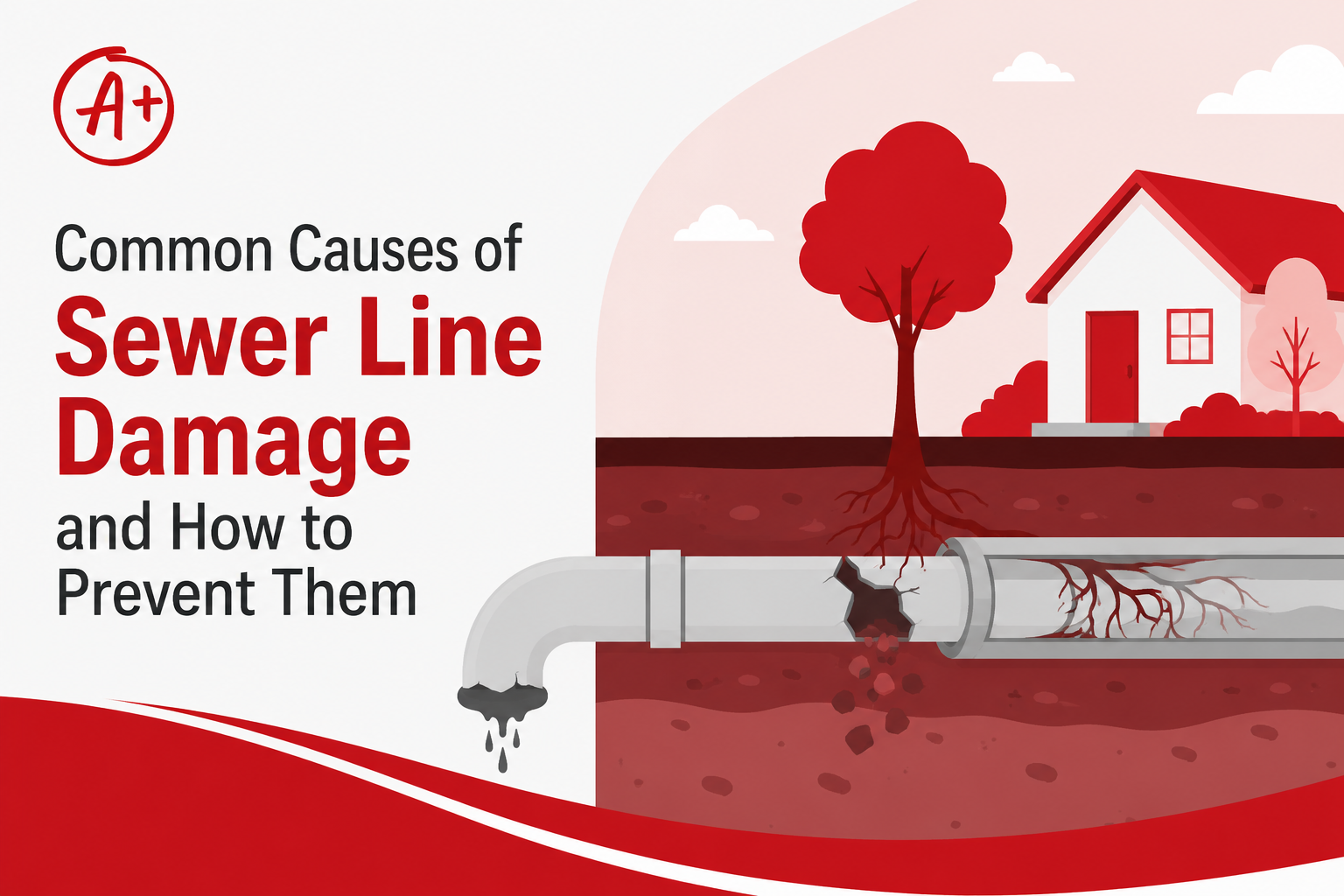
Because tree roots will find and search for moisture, hungry tree roots are a natural extension of the moisture-seeking systems. Since sewer pipes carry warm, nutrient-bearing wastewater, any small cracks, holes, or loose connections in your old sewer lines are an open invitation to tree roots to invade the sewer pipe damage. The tree root intrusion will find its way through the pipe and grow rapidly, forming large amounts of tangled hair-like mats that will hold waste materials, create blockages that cannot be flushed, and ultimately cause the pipe to collapse.
Your Warning Signs: Many slow-running drains in the lowest levels of your home, and unusual, hollow-sounding gurgling noises coming from your toilet drain when using your washing machine or shower.
2) Pipe Materials that Corrode and/or are Aging Outdated
If your house was built before the 1980s, your sewer line may be made from clay, cast iron, and/or an outdated material known as Orangeburg. Over the decades of continuous exposure to water and chemicals found naturally in soil, cast iron pipes develop rust inside; clay pipes become fragile and collapse under the weight of dirt on top; and if Orangeburg pipes are allowed to become wet, they become like old cardboard and will eventually collapse.
The Warning Sign: Offending, lingering smell of sulfurous drains in the basement, crawlspace, or any specific low spots in the yard.
3. The Grease Block (The Waste Mismanagement)
This is the fastest way to sabotage a sewer main-in-feed: pouring cooking oil, greasy food, or hot, melted animal fat through your kitchen sink. Even though the grease finds its way downstairs in liquid form, it will become solid on the pipes within minutes of hitting the underground plumbing. This sticky film traps hair, shed debris, and any flushable item, thus creating a great deal of pressure when this kind of material builds up, which in turn can break down older, weakened pipe connections.
The Warning Sign: Persistent back-ups of the kitchen or utility sink for which no amount of simple plunging or hand-cranked drain-snaking can rectify the issue.
4. Soil Movement and Heavy Construction
Severe cycles of winter frost and spring thawing, periods of heavy rainfall, or construction activity nearby that results in the excavation or digging below ground level, can all have an impact on the way soil moves beneath the surface of the earth. When the ground shifts like this, it creates uneven loads on the pipeline, which will cause it to sag in the middle (this sag is called a “bellied” pipeline), where water will collect, or alternatively, if it is a rigid material pipeline, it can cause it to break sharply and evenly apart.
You May Find One Of The Warning Signs: You may notice bright and lush green areas in your yard (particularly during hot and dry periods), which have thick and full grass, while the remainder of the grass is brown.
Proactive Actions To Avoid A Main Sewer Line Catastrophe
If you want to protect your home and your financial resources from costly damage to your plumbing and sewer line system, it is always better to be proactive than to react in an emergency situation. You can greatly extend the life of your sewer piping system by taking simple steps such as these:
Pay Attention to Your Landscaping: Never plant fast-growing, high-water-demanding trees (like willow, maple, elm, or birch) within 20 feet of your home’s underground sewer line path. Always choose shallow-rooted shrubs if you are going to plant them close to your plumbing systems.
Think Twice Before Flushing: It is best not to use toilets as disposal points for trash, wet wipes, pads and tampons, facial tissues, and heavy paper towels. Even items that say they are “flushable” do not break down quickly enough and will cause heavy main-line clogs by creating a foundation for building up.
Book a Professional Video Camera Inspection: The best way to save your budget is to see what is going on. An experienced plumber will insert a high-definition fiber optic video camera into your house’s cleanout to see the walls of your pipe live without digging up any grass.
Get It Early: A small amount of root hair or a small build-up of grease discovered during an annual check will allow you to make small, inexpensive, non-invasive repairs. These repairs can include hydro-jetting (high-pressure water can be used to clean the pipe) or chemical root inhibitors.
If you wait for the pipe to collapse due to a backup from a blockage, you will only be able to pay for removal (tearing up the lawn) and repairing the lawn completely. If you regularly maintain your pipe system, there is no chance that you will lose your entire pipeline.
FAQs
Does homeowner’s insurance cover a broken main sewer line?
Standard homeowner’s insurance policies typically do not cover sewer line repair if the damage occurs outside your home’s foundation due to normal wear-and-tear, age, or tree root growth. To protect yourself, you must explicitly add a “Sewer Backup and Service Line” rider or endorsement to your insurance policy.
What are the earliest signs of a broken sewer line?
The earliest warning signs include multiple plumbing fixtures backing up simultaneously, a distinct sewage smell in your yard or basement, toilets bubbling when you run a nearby sink, and unexplained soggy, indented patches in your lawn.
What is hydro-jetting, and does it prevent line damage?
Hydro-jetting uses a specialized nozzle to blast water inside your pipes at pressures up to 4,000 PSI. It safely shears away aggressive tree roots, obliterates calcified grease walls, and scrubs the pipe clean, making it a highly effective preventative sewer maintenance tool.
How long do modern sewer lines last?
Most homes built or renovated today use high-density PVC or ABS plastic pipes. These modern lines are highly durable and can easily last 50 to 100 years because they are completely immune to rust, corrosion, and feature slick, seamless joints that resist root penetration.
Can chemical drain cleaners fix a sewer line backup?
No. Standard pour-in liquid chemical cleaners are completely ineffective against heavy underground root blocks or solid grease dams. Worse, because the chemicals sit stagnant in the blocked pipe, corrosion, their highly corrosive formulas can actually eat through your metal or clay lines, accelerating structural failure.